
Therapy methods
We offer a comprehensive concept for the successful treatment of chronic wounds.
Our goal is healing – not just care.
We work closely with family doctors, nursing services, and health insurance companies to support our patients in a structured, interdisciplinary, and humane way.
We offer a comprehensive approach to the successful treatment of chronic wounds.
Our focus is on three key treatment steps.


1. Precise Diagnostics
Every chronic wound has a cause – without identifying it, sustainable healing is not possible.
That’s why we conduct a thorough medical evaluation to:
- Determine the type and stage of the wound
- Detect underlying conditions such as diabetes or arterial/venous circulation disorders
- Identify local and systemic risk factors
- Use imaging techniques where necessary (e.g., duplex sonography)
2. Treatment of the Underlying Condition
We don’t just treat the wound – we treat its cause to ensure long-term healing:
- Diabetes management in cooperation with your general practitioner or diabetologist
- Improvement of arterial circulation, if needed, through vascular surgery
- Treatment of venous disorders using compression therapy or vein surgery
- Pressure relief (decubitus prevention) with customized positioning and support devices
3. Modern Wound Management
We apply the most advanced, evidence-based treatment methods — tailored to each individual wound situation. Our therapies follow the phases of wound healing and the latest clinical standards.
a) Phase-Oriented Wound Treatment
The wound therapy is adapted to the respective stage of healing:
-
- Cleansing Phase (Exudation): Removal of debris, bacteria, and necrotic tissue to reduce infection and inflammation
- Granulation Phase: Promotion of new tissue growth using moist wound care products and bioactive materials
- Epithelialization Phase: Support of skin regeneration and protection against reinfection
- We use modern wound dressings including hydrogels, foams, alginates, silver- or honey-based products, and customized combination therapies.
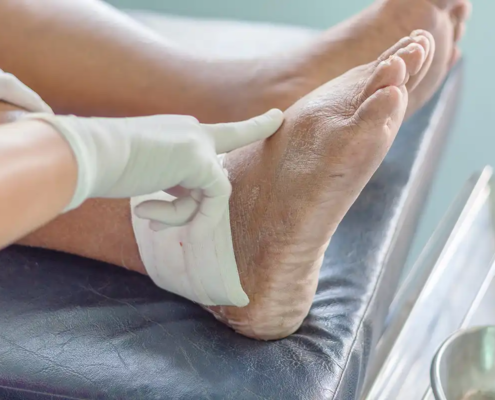
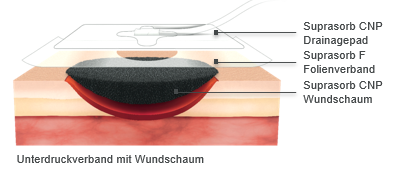
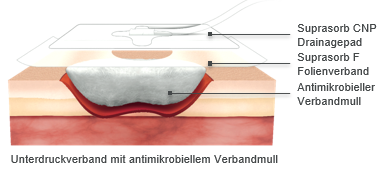
b) Negative Pressure Wound Therapy (NPWT)
-
- Wound care with vacuum technology for faster healing.
- Promotes the formation of granulation tissue.
- Reduces wound exudate (wound fluid).
- Improves blood circulation in the wound.
- Particularly suitable for large, deep, or infected wounds.
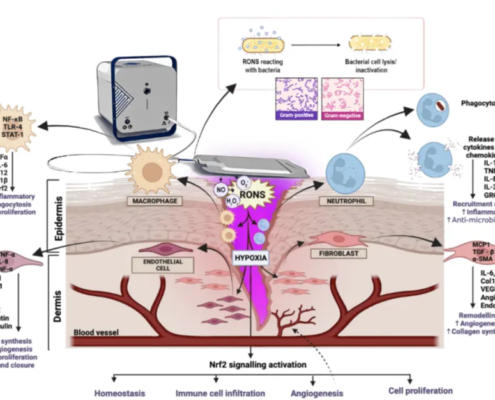
c) Cold Plasma Therapy
-
- Innovative method for germ reduction and wound healing.
- Antibacterial and anti-inflammatory effect.
- Painless application.
- No antibiotics necessary.
- Particularly effective against multi-resistant germs.
d) Skin Grafting
-
- Use of the body’s own skin to cover wounds.
- For large-area defects
- Split-thickness skin grafts or full-thickness skin grafts
- Improvement of healing and functionality
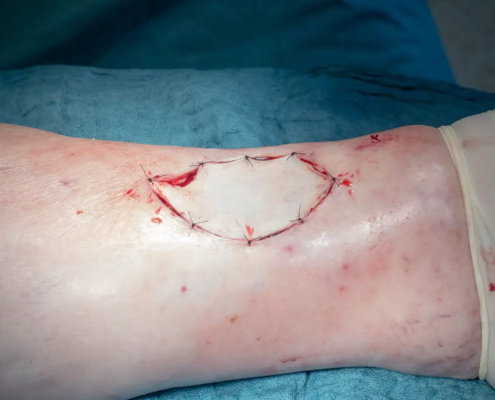
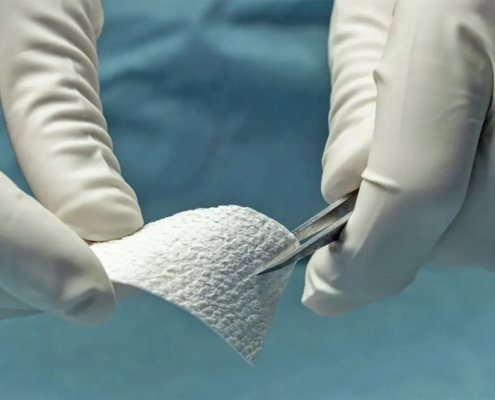
e) Fish Skin Graft Therapy
-
- Natural wound covering made from purified fish skin.
- Promotes cell growth and tissue regeneration.
- Biocompatible and well tolerated.
- Ideal for chronic, poorly healing wounds.
f) Mechanical Wound Debridement
-
- Removal of dead tissue to promote healing.
- Under local anesthesia or, if necessary, under general anesthesia.
- Especially for deep, infected, or poorly healing wounds.
- Performed under sterile conditions by experienced specialists.
g) Ultrasound-Assisted Wound Debridement
-
- Gentle cleaning of the wound with low-frequency ultrasound.
- Specifically removes plaque and biofilm.
- Protects healthy tissue.
- Promotes blood circulation and regeneration.


